
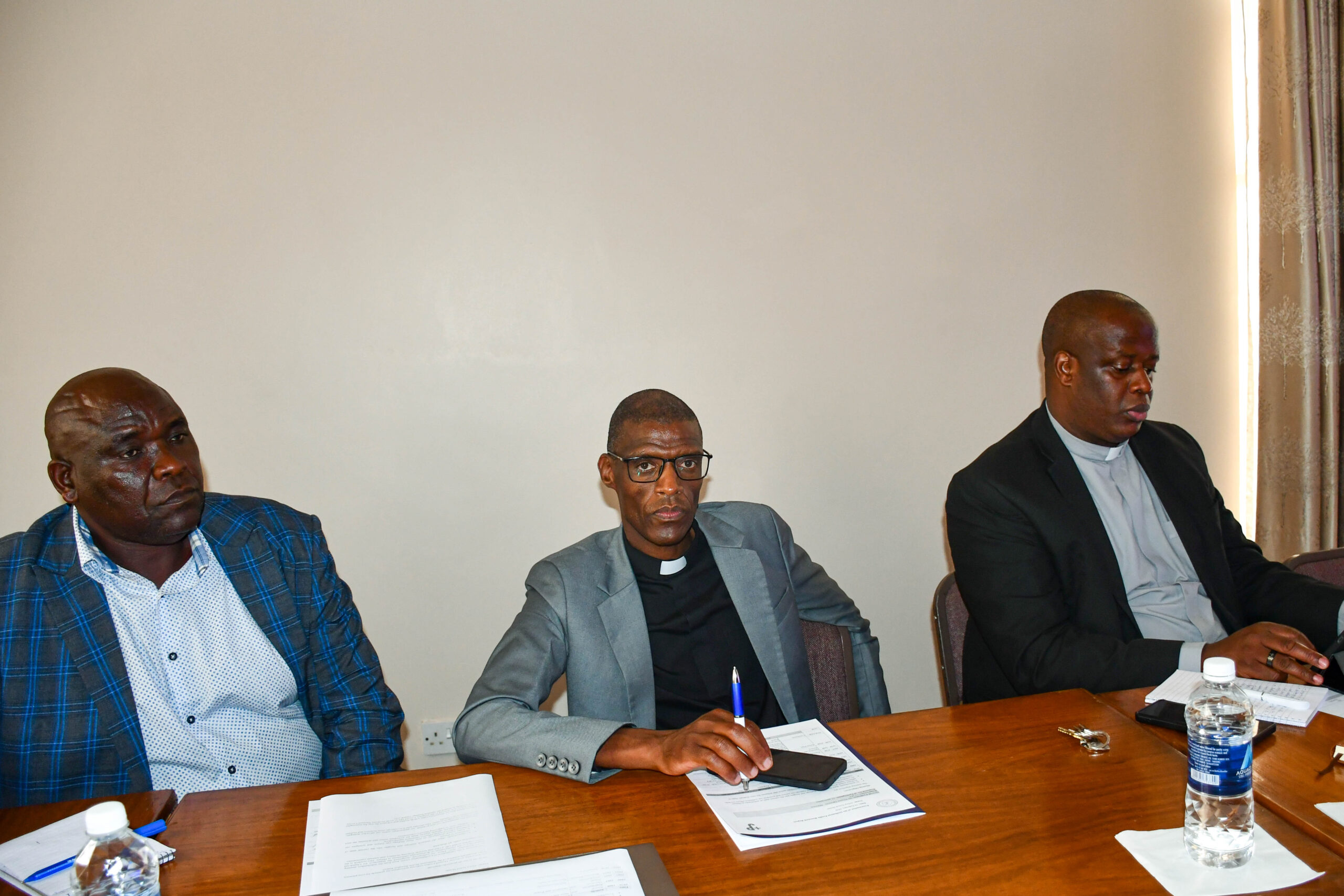
Paul Machena – the National coordinator of CCJPZ, Fr Tryvis Moyo – the Secretary General of the ZCBC and Fr Johannes Maseko – the Catholic Parliamentary Liaison Officer, listen attentively to contributions by other stakeholders.
By Pauline Chateuka
The Catholic Commission for Justice and Peace in Zimbabwe (CCJPZ), with the support of Catholic Agency for Overseas Development (CAFOD), on the 10th of February in Harare at the Africa Synod House, presented findings from its report entitled, The Settlement Profile Research Report.
The meeting was attended by key stakeholders such as the Ministry of Local Government and Public Works, the Ministry of National Housing and Social Amenities, residents’ associations, civil society organisations, members of the Zimbabwe heads of Christian denominations, the City of Harare, and the Zimbabwe Catholic Bishops’ Conference Officials.
The presentation delivered by the consultant Professor Innocent Chirisa focused on disseminating the research findings, stimulating informed discussions, and catalysing collaborative action towards the regularization of dysfunctional settlements in Harare.
During the meeting, CCJP National Coordinator Paul Muchena emphasised the need to foster discussions and collaboratively identify priority areas for immediate action while supporting Harare’s communities.
The research targeted areas were Epworth, Hopley, Churu Farm, Caledonia, and Stoneridge. Issues of informal settlements have been topical in Harare because of rampant politically connected land barons.
The government, through responsible ministries, has introduced a programme of issuing title deeds to these informal settlements, which is being done by a trust named the Kwangu/NgaKwami scheme.
The findings of the report show that these settlements have limited access to basic services such as water, sanitation, healthcare, education, and transportation. Residents rely on communal resources like wells for water and face sanitation issues, leading to health risks.
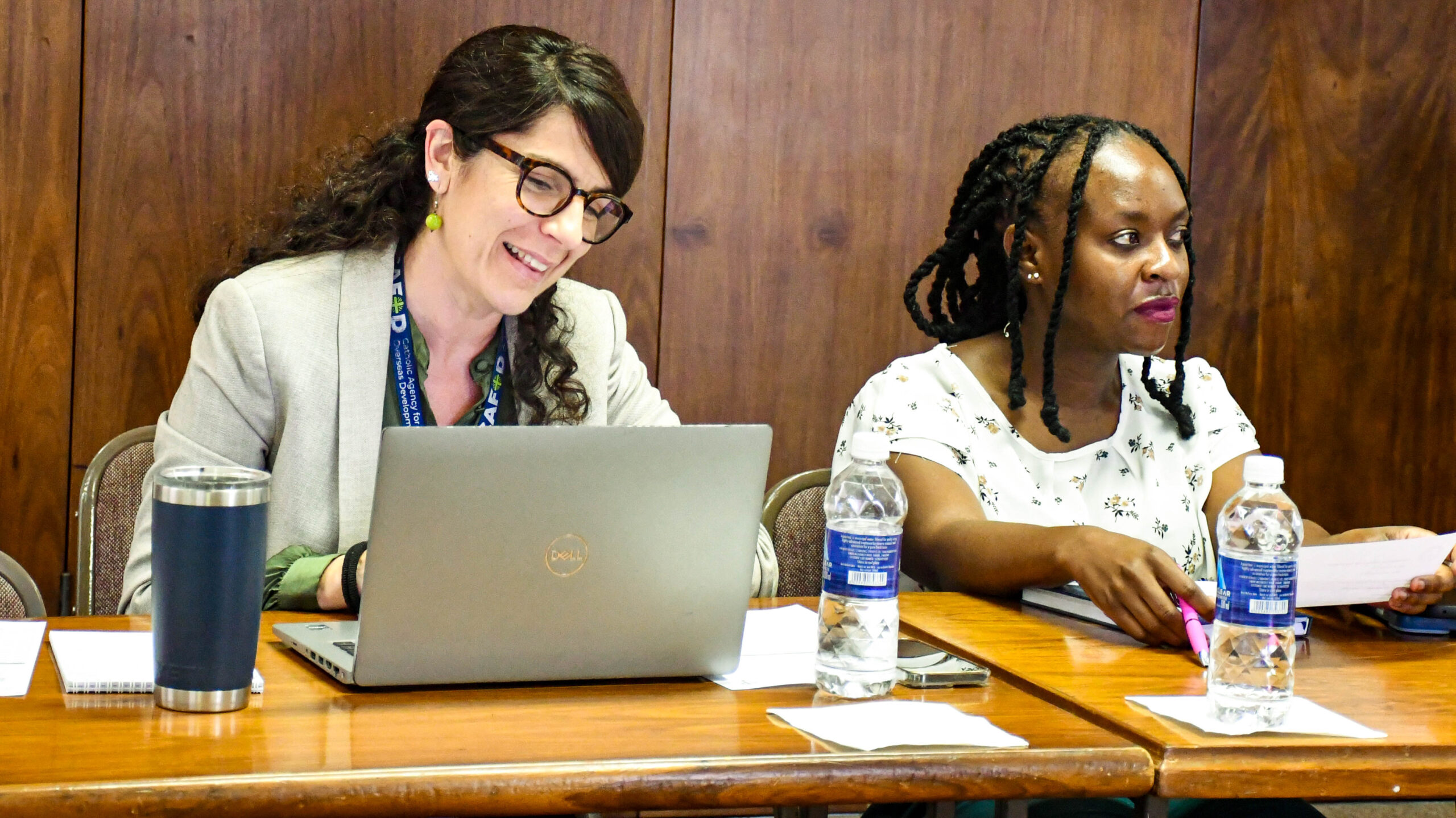
CAFOD Country Representative Elenonora Aralla shares her remarks at the meeting
The initiative is deeply rooted in the Church’s social teachings and commitment to advocating for marginalized communities, aligning with national development strategies and international standards of human dignity and equitable urban development.
In his speech, Fr Trayvis Moyo, the Secretary General of the Zimbabwe Catholic Bishops’ Conference, said the church is being the voice of the voiceless and thanked all stakeholders who participated in the research.
“Our presence in this is deeply rooted in the social teachings of the church, which challenge us to be the voice of those voices that are unheard, and the church supports government initiatives such as the National Development Strategy 2(NDS2), which prioritises the provision of affordable and quality housing for all citizens with a focus on regularising informal settlements’’, said Fr Moyo.
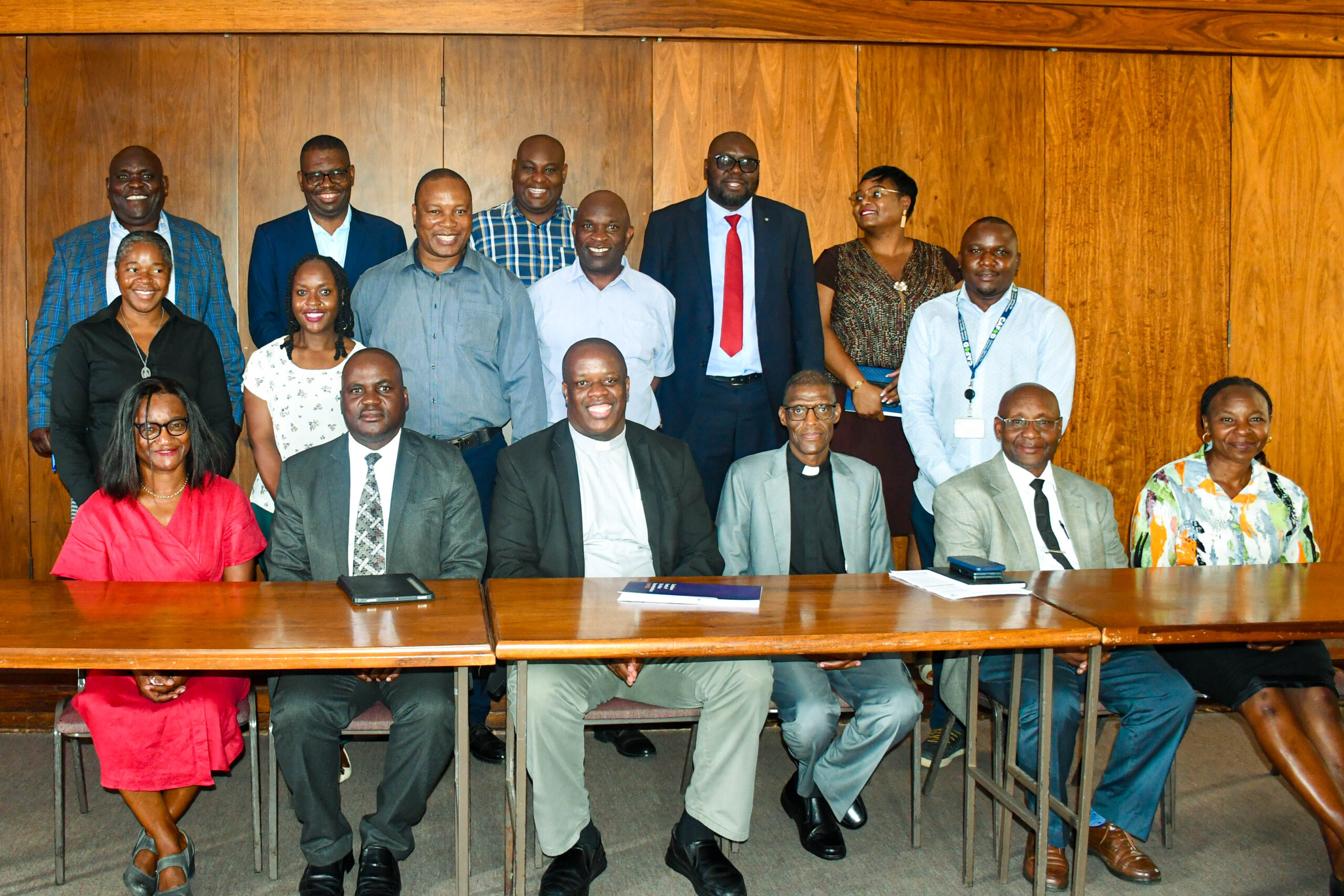
Stakeholders who attended the meeting pose for a group photo.
Several of the participants who responded to the question about the usability of Section 27 of the Regional and Town Council Planning Act (RTCPA) indicated that Section 27 is not usable for spatialised informal settlement regularisation.
The gap in the formal regularisation procedure under the current policy framework is contributing to the delays in meeting the demands of informal settlements in Harare.
The stakeholders who attended the meeting resolved to collaboratively make contributions towards the regularisation protocol that will be presented in parliament for policy formulation, and action leading to sustainable urban development and an improved life for citizens in the informal settlements of Harare.