
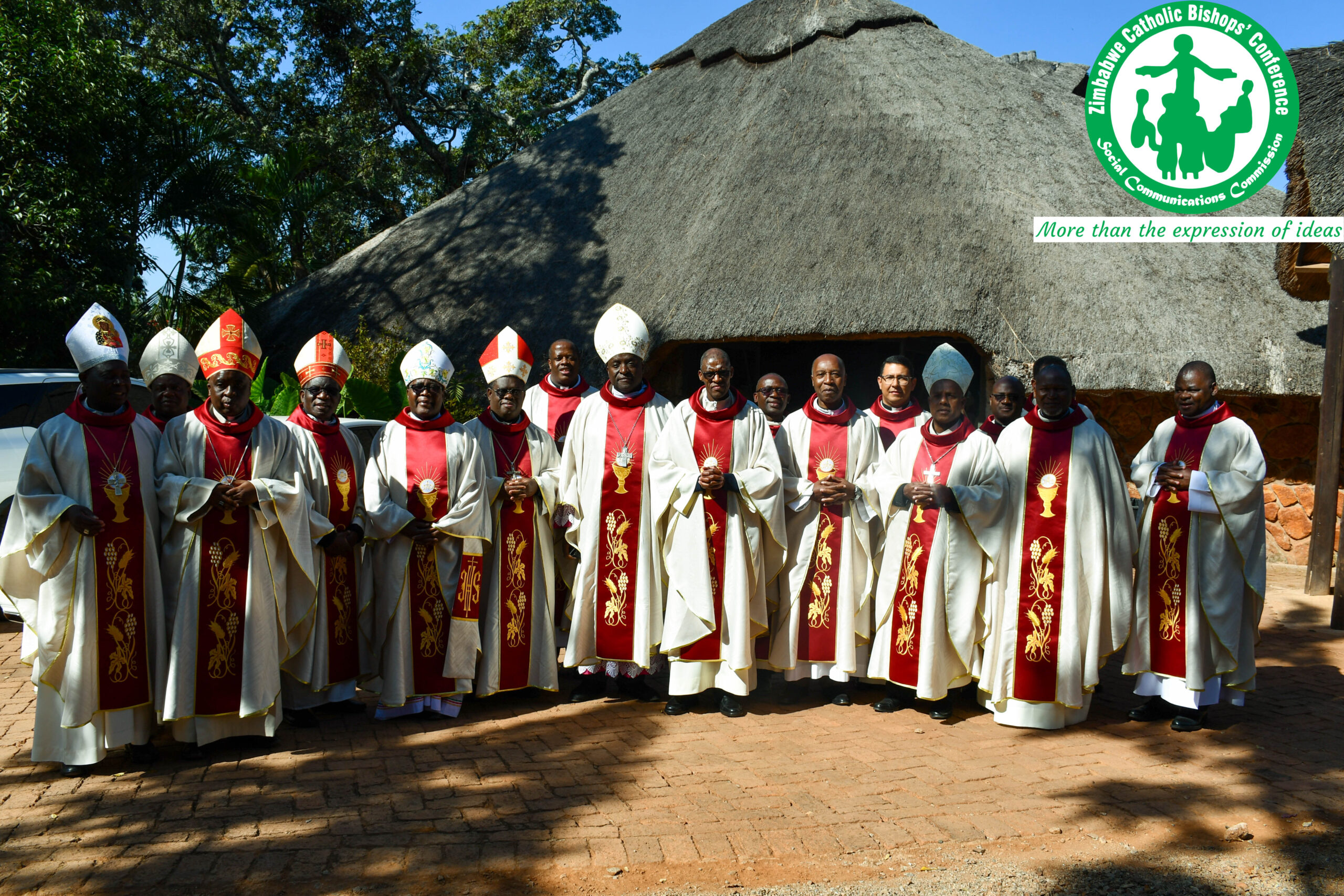
Bishops and some of the delegate priests pose for a photograph after the opening Mass of the Plenary Meeting.
By Johnston Mlambo
HARARE – The first day of the Zimbabwe Catholic Bishops’ Conference (ZCBC) Plenary Meeting was marked by deep reflection on the implementation of the Synod on Synodality, the changing religious landscape in Zimbabwe, and the social and economic realities facing the nation.
The day’s proceedings centred on the Plenary theme, “Implementing the Synod on Synodality: Translating Synodal Principles into Concrete Pastoral Action,” with delegates exploring practical ways of fostering a more inclusive, participatory, and mission-oriented Church.
The opening reflection was delivered by Fr. Conrad Mutizamhepo, who unpacked the meaning of synodality and the purpose of the Synod on Synodality. He explained that synodality is not simply a programme or administrative process but a way of being Church, rooted in communion, participation, mission, listening, and discernment.
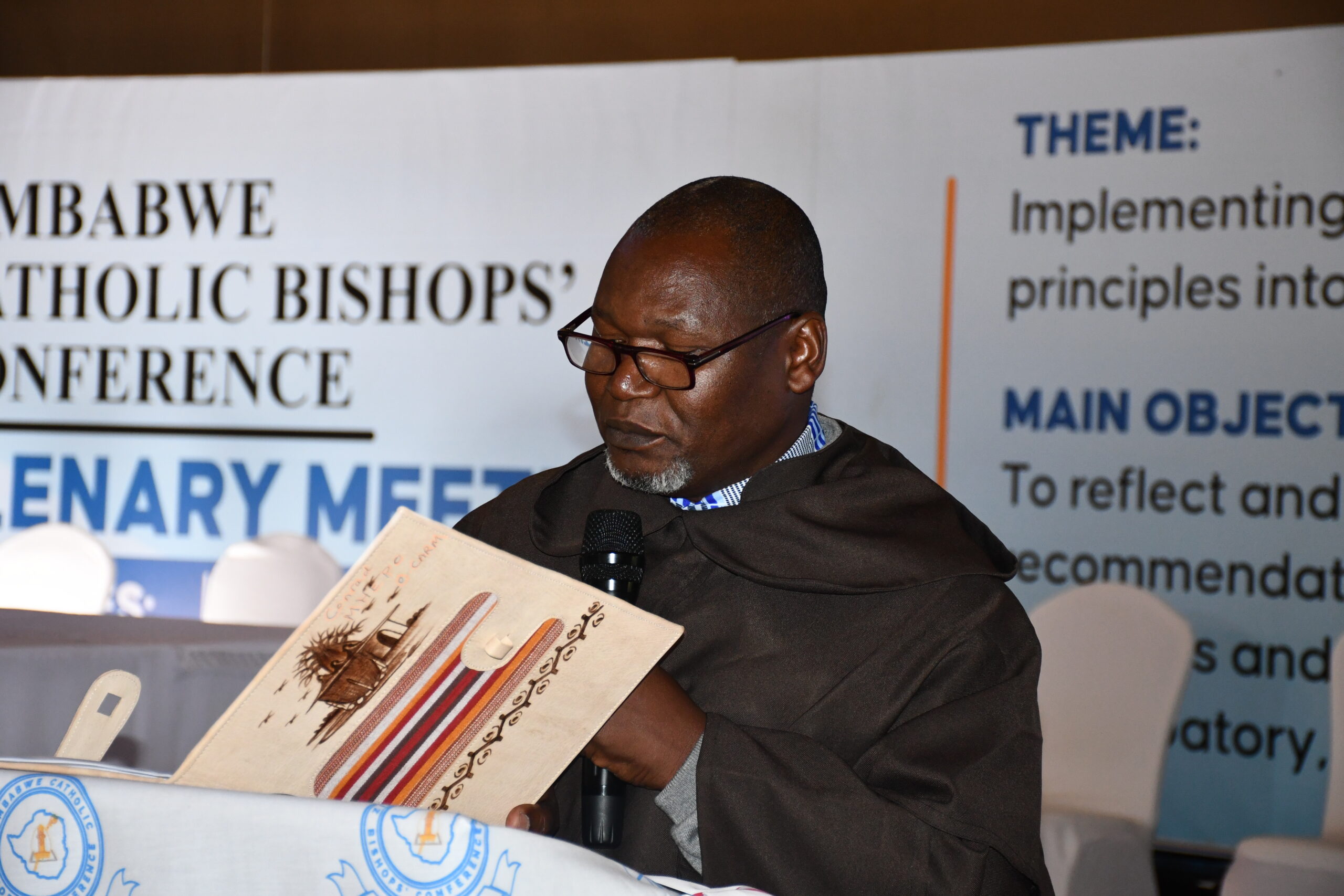
Fr. Conrad Mutizamhepo leads the reflection on theme of the Plenary Meeting: “Implementing the Synod on Synodality: Translating Synodal Principles into Concrete Pastoral Action.”
Fr. Mutizamhepo stressed that the successful implementation of synodality requires renewed investment in catechesis, ongoing formation, and pastoral structures that encourage the active participation of all the faithful in the life and mission of the Church.
“The success of synodality depends on our ability to listen attentively to one another and to the Holy Spirit,” he said. “We must learn to listen well, speak with charity, and discern together the path that God is calling the Church to follow.”
Participants were challenged to reflect critically on current pastoral practices and structures by asking what should be discontinued, what should be strengthened, and what new initiatives should be introduced to advance the Church’s mission. Delegates also considered what structures might need to be dismantled, reinforced, or newly established to foster greater participation and missionary outreach.
The reflection was followed by a presentation from Fr. Dr Antonio Santos Marizane on the socio-religious situation in Zimbabwe. He described religion as a critical pillar of society that provides meaning, purpose, moral values, social cohesion, and hope.
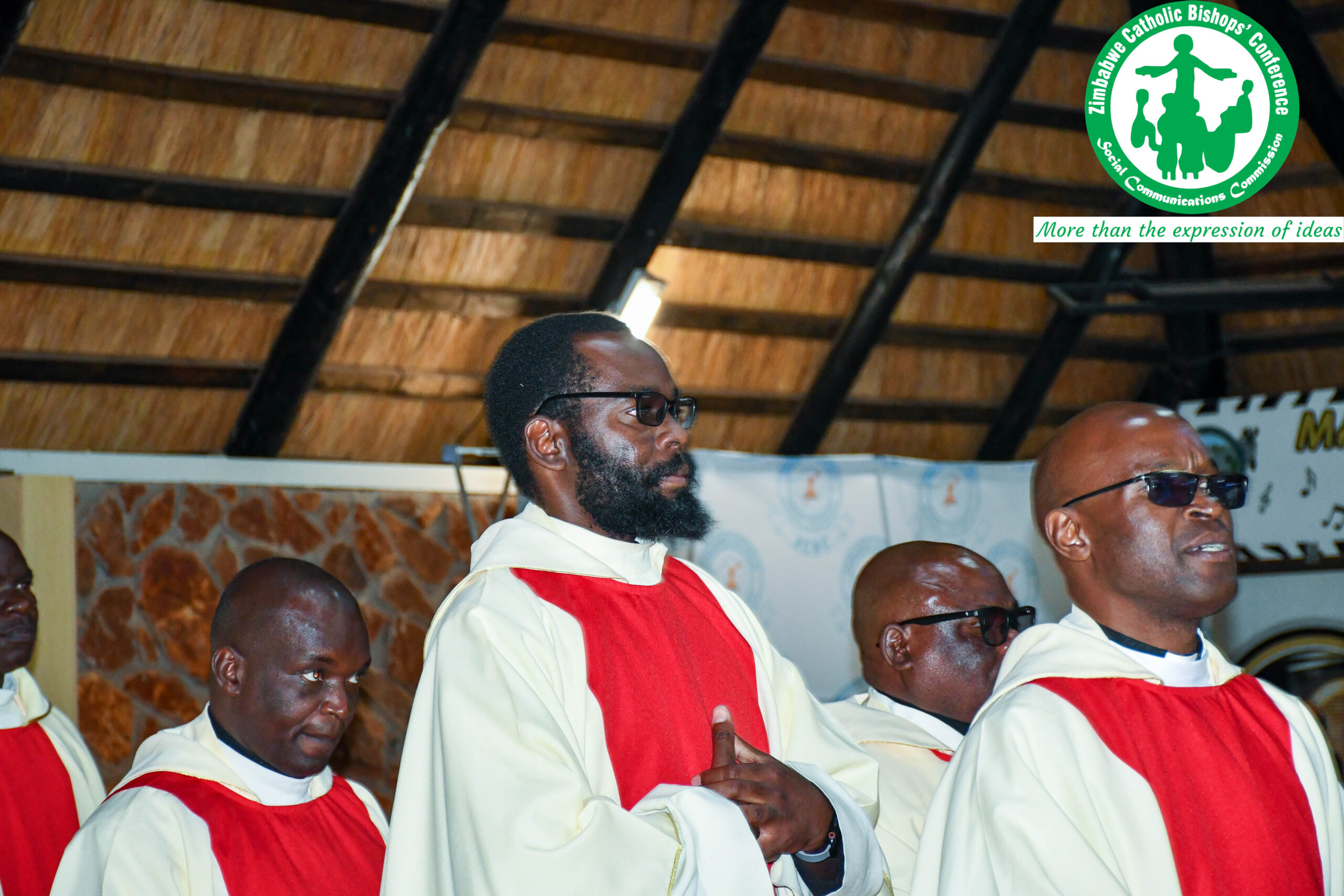
Fr. Ian Muenda and other priests actively participates in the liturgy.
“Religion remains a mediating force in the collective experience of the majority of Zimbabweans today, in which people find comfort, explain their existential struggles, and keep hope alive for a better tomorrow,” he said.
Fr. Marizane noted that according to the 2022 national census, 85.3 per cent of Zimbabweans identify as Christians, making religion a significant force in shaping the country’s social and cultural life. He highlighted the diversity of Zimbabwe’s religious landscape, which includes Catholics, historic mission churches, evangelical and Pentecostal communities, apostolic sects, and practitioners of African Traditional Religion.
The presentation sparked lively discussion among delegates, particularly on the growing attraction of some Catholics and members of historic churches to indigenous churches, apostolic sects, and Pentecostal ministries.
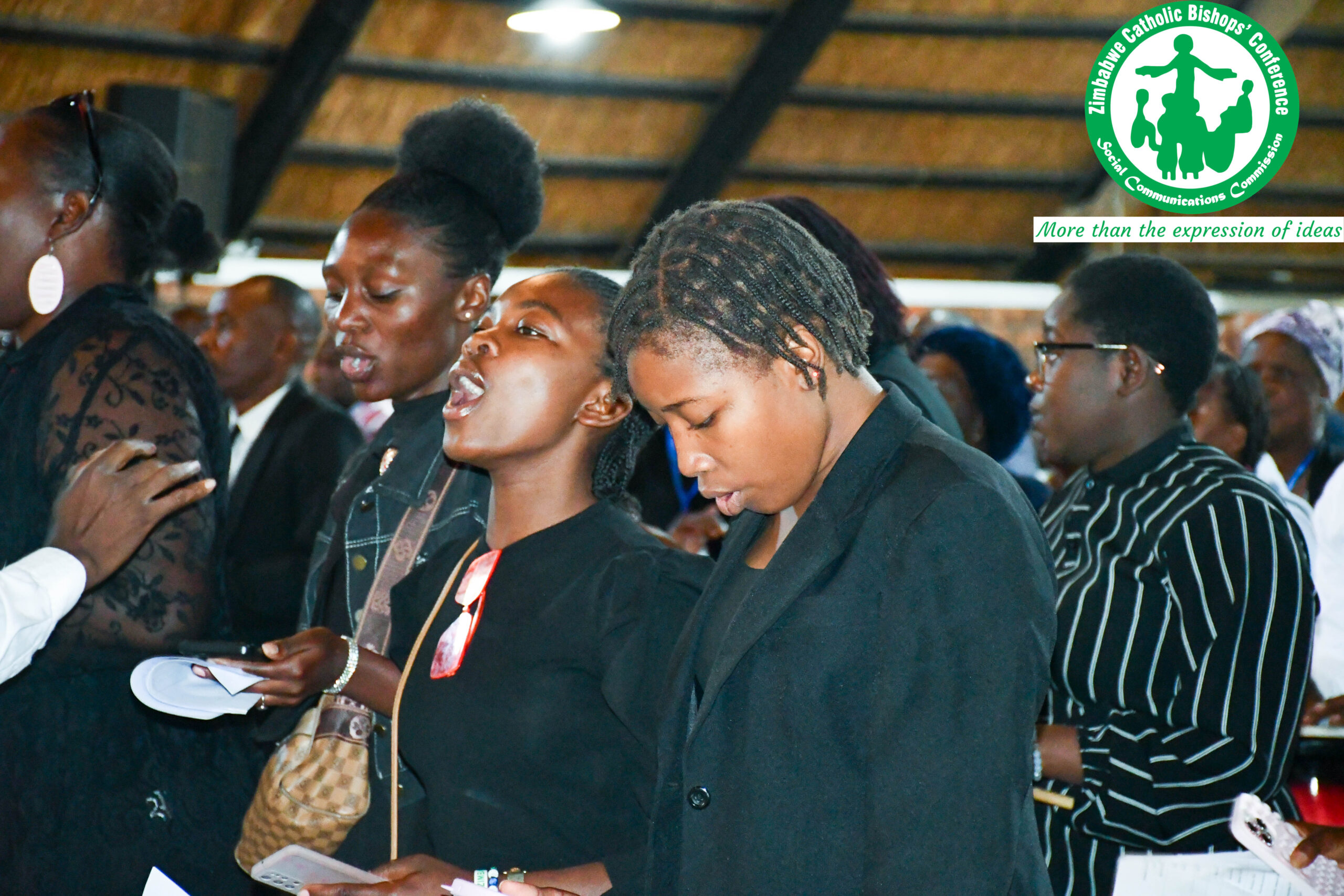
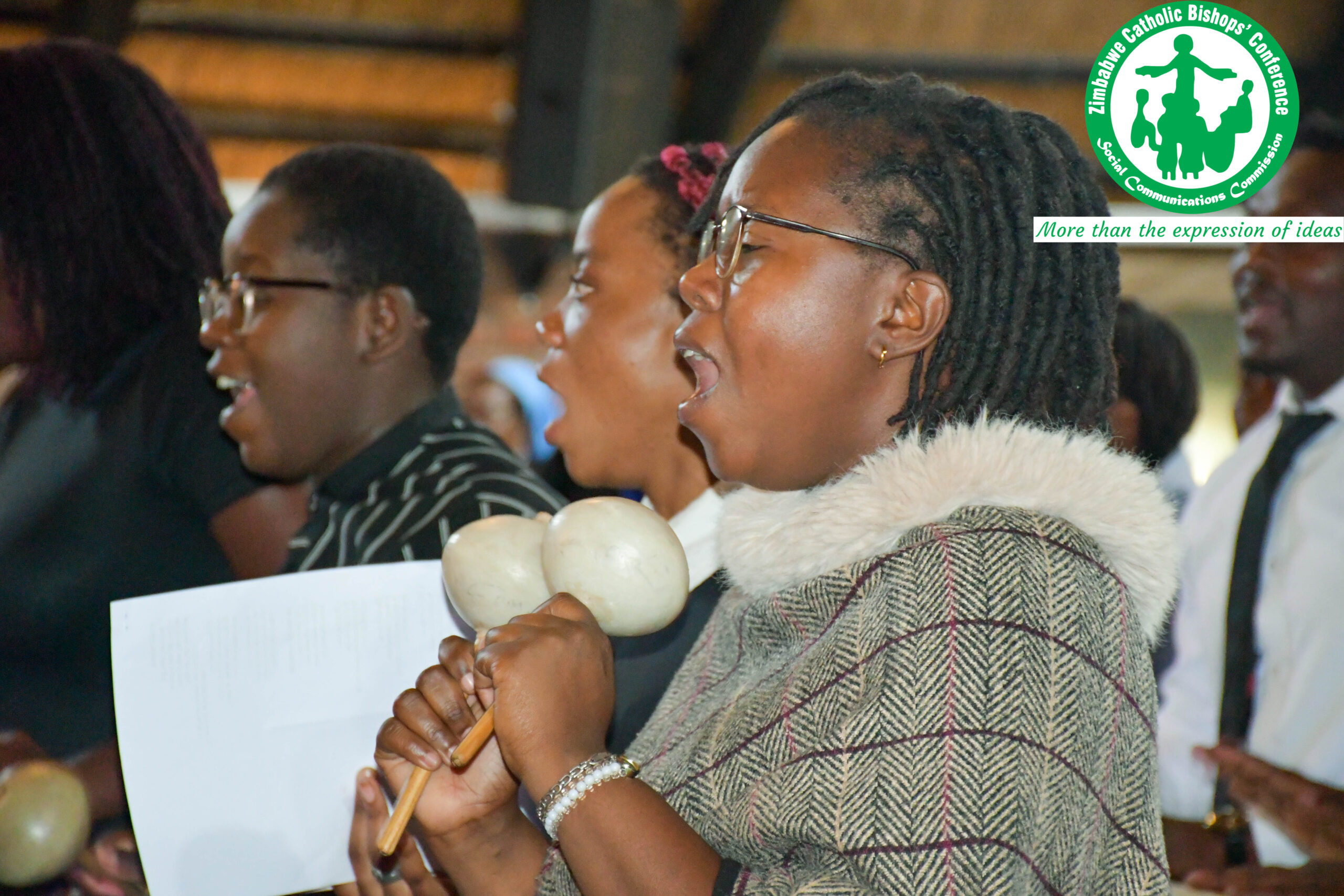
Choir members sing, in a synodal spirit, sing from the heart.
Participants reflected on factors that draw people to such movements, including the search for belonging, healing, practical responses to daily challenges, visible community support, and messages that appear to offer immediate hope in difficult economic circumstances. The discussions challenged the Church to strengthen catechesis, deepen formation, improve pastoral accompaniment, and build stronger faith communities capable of responding to the spiritual and social needs of the faithful.
The economic and social realities of Zimbabwe were examined in a presentation by economist and business leader Mr Vincent Musewe, who encouraged delegates to look beyond immediate problems and seek to understand the deeper structural causes of the nation’s challenges.
Quoting Albert Einstein’s famous observation that “The problems we face cannot be solved at the same level of thinking that created them,” Musewe challenged participants to embrace new ways of thinking about national development and social transformation.
He argued that while Zimbabwe possesses vast natural resources, sustainable development requires sound leadership, stronger institutions, long-term planning, and a willingness to address the underlying systems and structures that shape economic outcomes. Using the image of an iceberg, he illustrated how visible problems often originate from deeper cultural, historical, political, and structural realities that are not immediately apparent.
One of the questions that emerged during discussions was whether there remains hope for Zimbabwe in the face of persistent economic and social challenges. Contributors maintained that hope remains alive, but emphasised the need for ethical, visionary, and servant leadership capable of guiding the nation towards sustainable development and social renewal.
Several delegates observed that Zimbabwe’s future would depend not only on economic reforms but also on the emergence of leaders committed to integrity, accountability, justice, and the common good.
The day also featured a presentation by legal practitioner and former Cabinet Minister Mr Erick Matinenga, who reflected on governance, leadership, public institutions, and the importance of accountability in building a just society.
Throughout the discussions, delegates repeatedly returned to the central question of how synodal principles can be translated into concrete pastoral action. Participants emphasised that synodality must become a lived reality characterised by listening, dialogue, participation, accompaniment, and missionary outreach.
As the first day concluded, there was a shared recognition that the Church’s mission in Zimbabwe requires both fidelity to the Gospel and a willingness to engage thoughtfully with the complex religious, social, political, and economic realities shaping the lives of the people.
The discussions are expected to continue as delegates further discern practical pathways for implementing the Synod on Synodality within the Church in Zimbabwe.